ClawTrust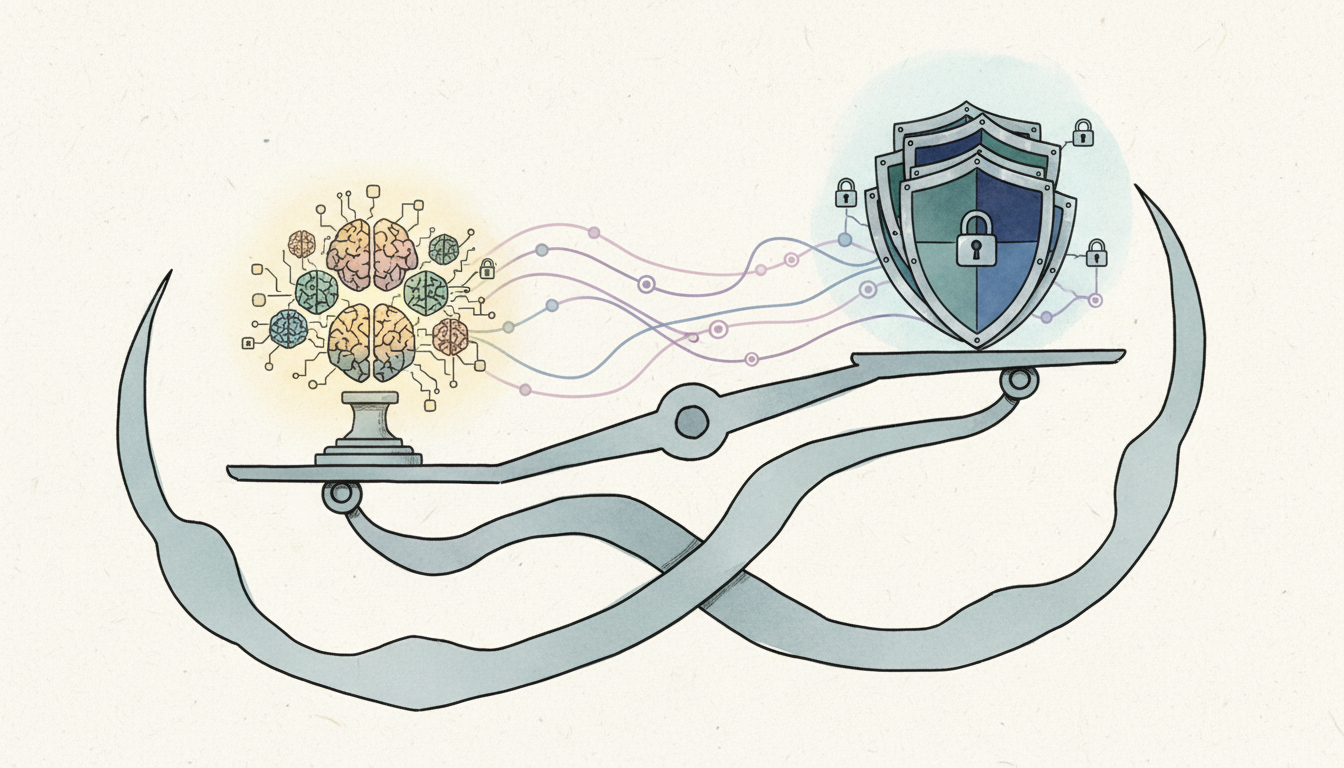
OpenClaw's AI Security Philosophy: Strong Defaults Without Killing Capability
Security challenges often derail AI agent projects. Many platforms choose overly restrictive safeguards that limit usefulness, while others chase raw power at the expense of trust. The balance comes from enough capability for real work without undue risks. OpenClaw embodies this in its vision: strong defaults that keep high capability intact. This defines practical AI security for production use.
Comparing Common AI Security Strategies
| Model Strategy | Focus | Capability | Operational Risk |
|---|---|---|---|
| Padded Cell | Maximum Safety | Low / Shallow | Zero |
| Wild West | Maximum Power | High / Aggressive | Extreme |
| OpenClaw | Strong Defaults | High / Targeted | Managed / Controlled |
Why Security Matters for Advanced AI Assistants
As AI assistants manage channels, devices, workflows, and operational contexts, simplistic security no longer suffices. Risks grow beyond text generation into areas demanding deep trust. OpenClaw builds security in from the start, treating it as a deliberate tradeoff. Risky paths stay explicit and operator-controlled, steering clear of blanket restrictions or hidden toggles.
Secure Defaults That Avoid Paralysis
Most AI systems stumble at the extremes: defaults too safe to be practical, or unchecked power that burdens users. OpenClaw takes a middle path with secure defaults and simple controls for trusted setups. This works well for advanced users who want capability paired with clear visibility into risks.
Security is not the enemy of capability; it is the infrastructure that makes high-power capability survivable in production.
Explicit Setup as a Core Security Feature
OpenClaw's terminal-first onboarding puts documentation, authentication, permissions, and security posture front and center. It skips convenience layers that hide critical choices. In a world obsessed with seamless experiences, this deliberate friction ensures users grasp the trust model before deploying powerful agents.
Tailored for High-Power Production Workflows
This approach shines in real work environments where AI integrates with communication and user contexts. Explicit controls and clear boundaries beat hidden defaults—unchecked assumptions often lead to costly problems. Here, security shapes the tool beyond mere compliance.
FAQ: Understanding OpenClaw's Trust Model
- Q: Does 'terminal-first' setup create too much friction for users?
- A: Yes, but intentionally. It encourages early engagement with configurations and permissions, leading to informed decisions rather than blind trust in automation.
- Q: How do 'strong defaults' prevent common AI risks like prompt injection?
- A: By starting with minimal permissions. High-risk actions require explicit opt-ins or adjustments, so malicious prompts can't bypass unopened boundaries.
- Q: Can this philosophy scale to enterprise-level environments?
- A: Yes, and security architects appreciate it. It treats AI agents as auditable tools with scoped permissions, not opaque black boxes.
OpenClaw's Security as a Competitive Advantage
Users seek powerful AI assistants they can rely on. OpenClaw aligns safety with utility, avoiding forced tradeoffs. More considered than blanket lockdowns or rushed releases, it lets systems integrate smoothly into workflows.
Final Thoughts on OpenClaw AI Security
OpenClaw pushes AI security forward with strong defaults, explicit controls, transparent trust choices, and support for demanding workflows—not just checklists. This goes beyond surface protections. As AI agents become core to workflows, OpenClaw's model sets it up for practical, scalable adoption.