ClawTrust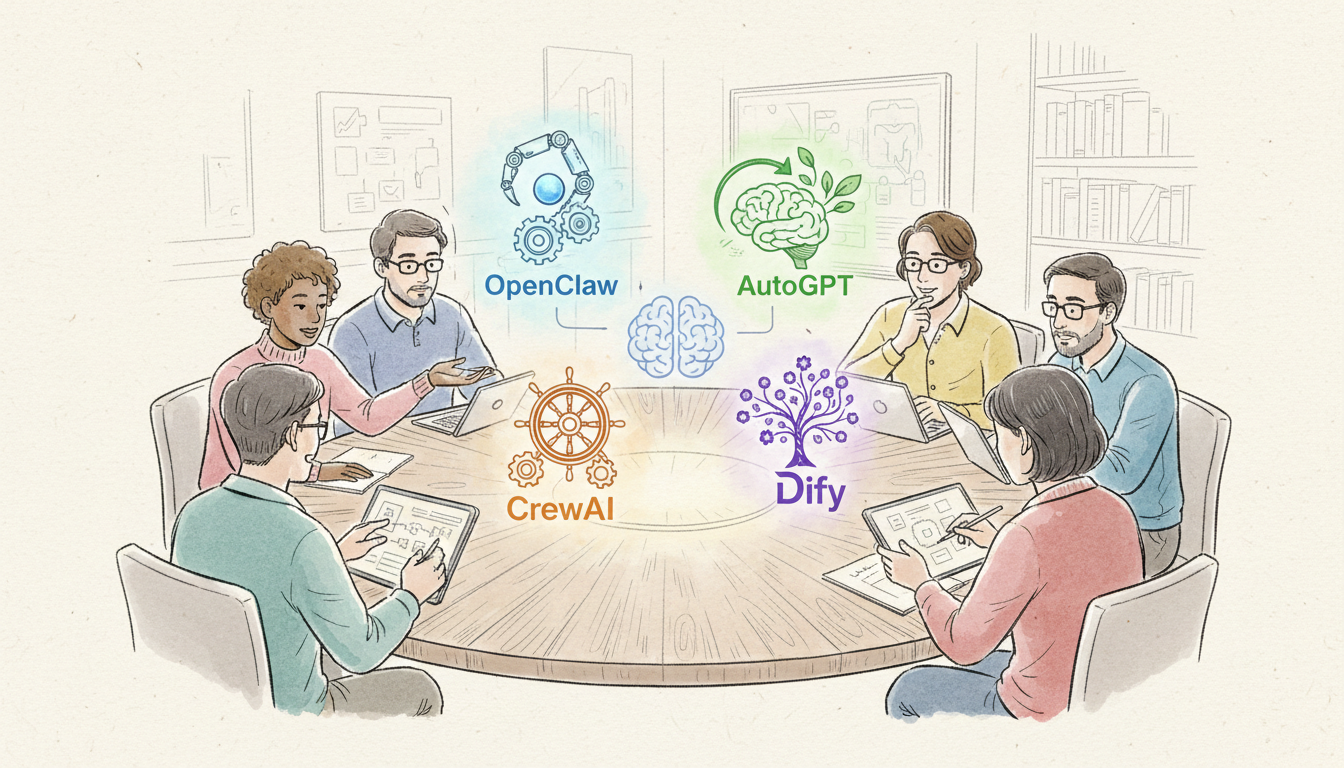
OpenClaw vs AutoGPT vs CrewAI vs Dify: Which AI Agent Framework Fits Your Team?
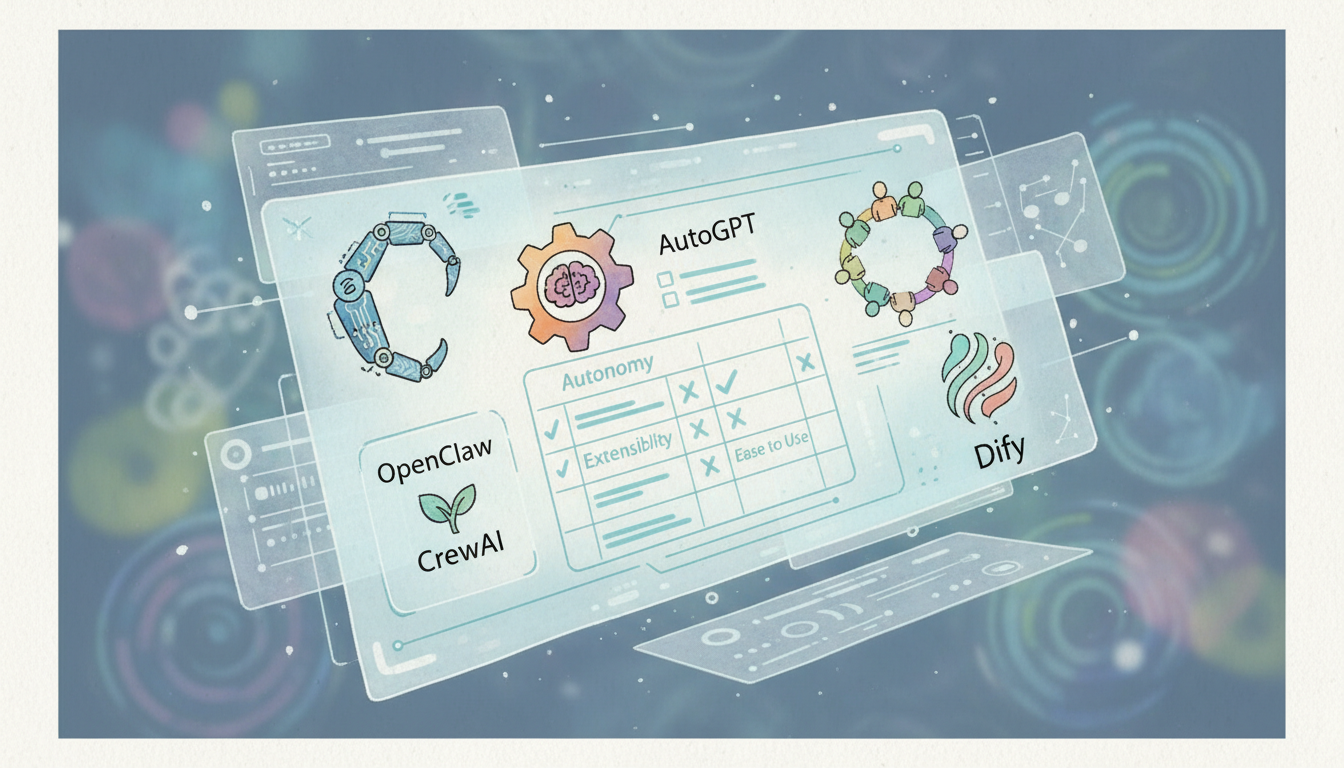
The AI agent market is crowded with frameworks promising autonomous reasoning, tool use, workflow automation, and production readiness. But beyond the marketing, key differences emerge. Some bring agents closer to devices and communication channels, others focus on multi-agent orchestration, and some prioritize visual workflow building for fast app delivery. Treating OpenClaw, AutoGPT, CrewAI, and Dify as interchangeable often leads to suboptimal choices.
Why AI Agent Framework Selection Is Harder in 2026
A year ago, teams wondered if agents could work at all. In 2026, the focus has shifted to reliable integration into real business systems. Challenges now include execution depth, workflow control, data connectivity, governance, and rapid prototyping to production. Comparisons based solely on open vs. closed source or tools vs. workflows miss the point. The real question is: what kind of agent system does your team need?
The 4 Questions That Matter More Than Feature Lists
When evaluating AI agent frameworks like OpenClaw, AutoGPT, CrewAI, or Dify, four questions cut through the noise: How deeply can agents act in real environments? How well does the framework manage state, branching, and long-running workflows? How quickly can teams turn ideas into usable products? And what operational overhead accompanies that flexibility? These lenses clarify the differences.
Quick Comparison: Four Frameworks, Four Strengths
| Framework | Best understood as | Strongest advantage | Best fit |
|---|---|---|---|
| OpenClaw | A local-first personal AI assistant layer | Device proximity, multi-channel access, agent routing | Developers and power users who want agents close to real work surfaces |
| AutoGPT | A platform for continuous AI agents | Modular platform components for building and managing ongoing automation | Teams that want extensible, always-running agent systems |
| CrewAI | A multi-agent orchestration framework | Clear separation between collaborative agents and controlled flows | Teams building production multi-step, multi-role automations |
| Dify | A visual platform for agentic workflows | Fast delivery of AI apps with tools and data integrations | Businesses that care about speed, usability, and deployment simplicity |
This table draws from each project's official materials. OpenClaw highlights local-first control, multi-channel support, routing, voice, and visual canvas. AutoGPT offers components for creating, deploying, and managing continuous agents. CrewAI structures around Crews and Flows for production multi-agent systems. Dify emphasizes visual workflows, integrations, and quick AI app deployment.
OpenClaw: Agents Embedded in Your Work Environment
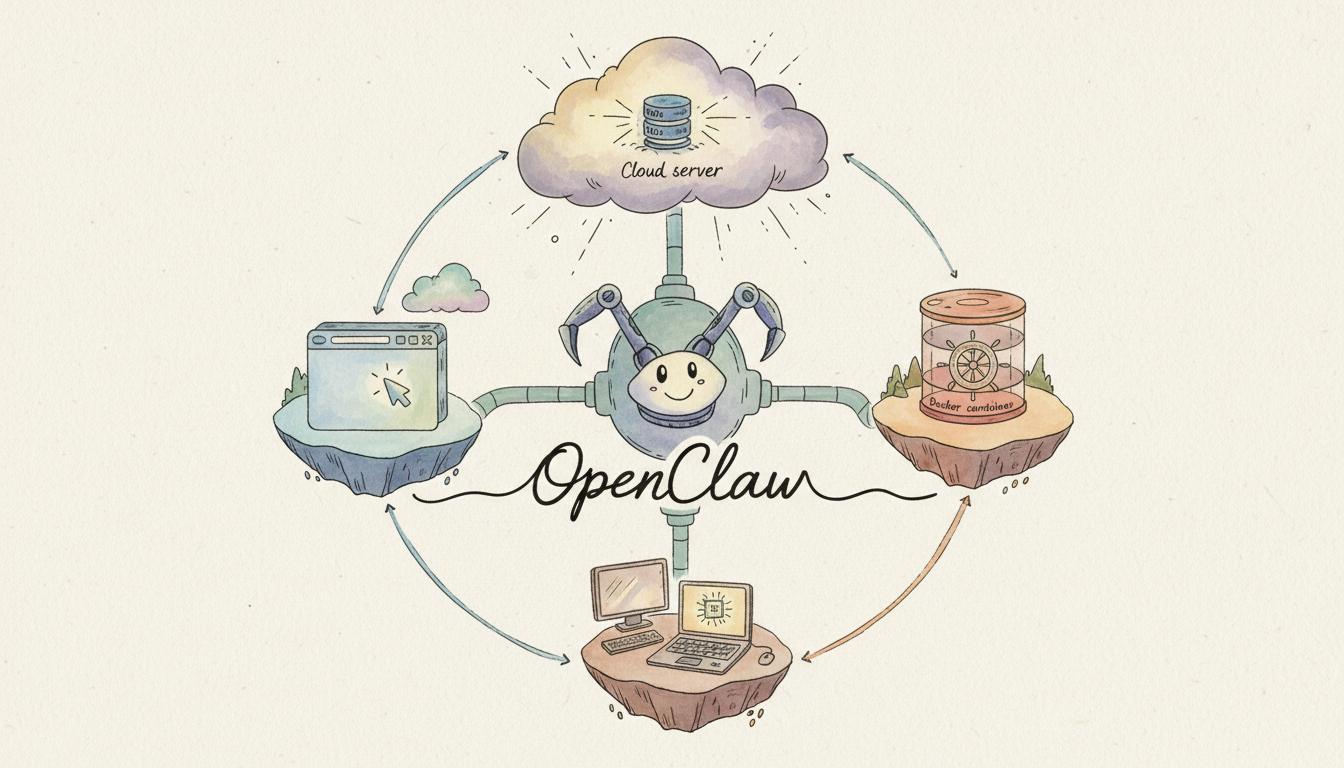
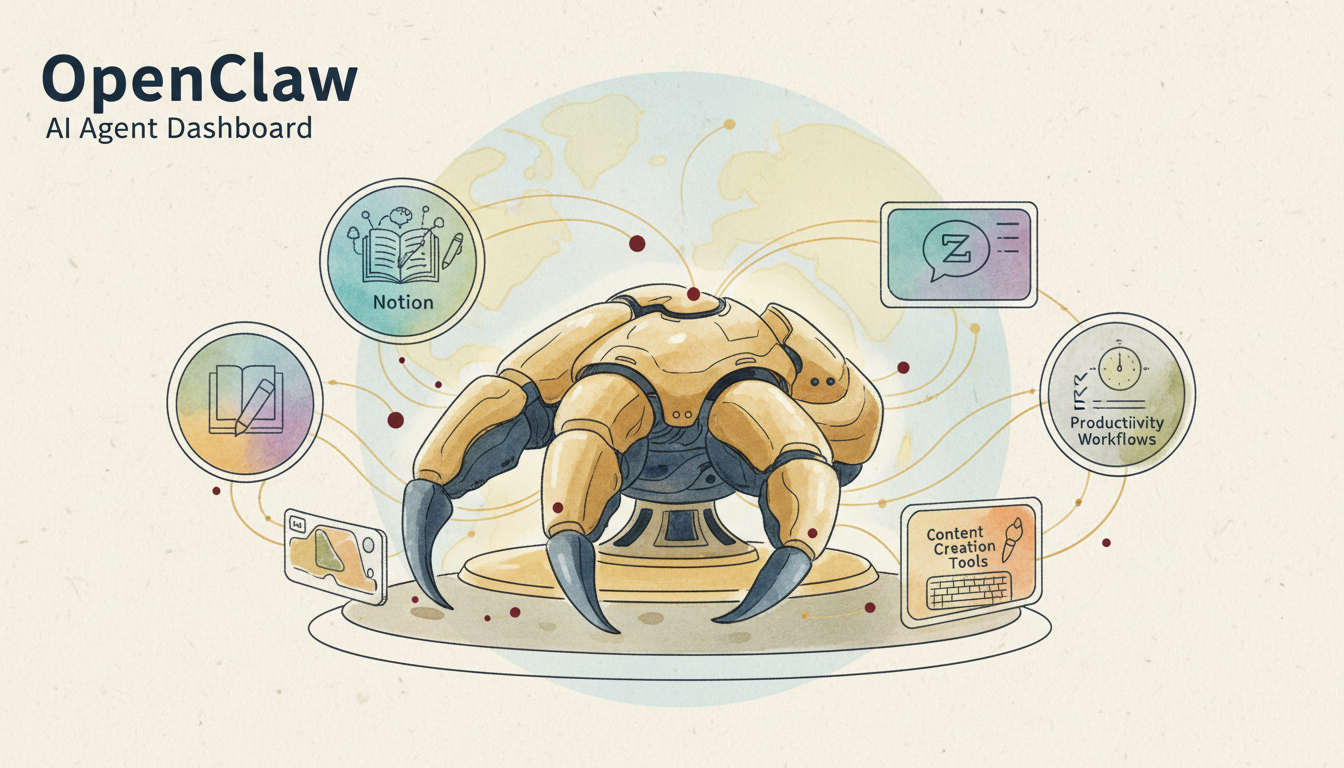
OpenClaw positions itself as a personal AI assistant running on your devices, integrating with your channels. It stresses local-first control, multi-channel inboxes, agent routing, voice modes, and a live visual canvas. Unlike web-based orchestration tools, OpenClaw embeds AI into daily operations, making it ideal for execution context.
Choose OpenClaw if you need agents living near devices, channels, and personal workflows—not just another dashboard. It's suited for builders integrating AI into digital workspaces.
AutoGPT: A Platform for Continuous Automation
AutoGPT has evolved from early experiments into a platform for continuous AI agents automating complex workflows. It includes frontend, server, Forge, benchmarking, UI, and CLI components. View it as an ecosystem for ongoing operations, not just loops.
AutoGPT suits teams seeking flexibility for continuous automation. It requires strong product discipline for its modularity.
CrewAI: Orchestrating Role-Based Multi-Agent Systems
CrewAI orchestrates autonomous agents with Crews for collaboration and Flows for structured execution, state management, and control. It's compelling for coordination-heavy systems.
CrewAI fits automations resembling team processes: research, content ops, sales, task delegation. It balances autonomy and control, appealing to production needs.
Dify: Fast-Track to Usable AI Apps
Dify is an open-source platform for agentic workflows via visual definition, tool/data integrations, and quick deployment. It prioritizes practical delivery over experimentation.
Dify excels when speed matters: internal copilots, knowledge assistants, support workflows. Its visual approach reduces engineering friction.
Which AI Agent Framework Should You Choose?
Pick OpenClaw for embedded agents in digital environments. AutoGPT for continuous extensibility. CrewAI for multi-agent orchestration. Dify for rapid visual deployment.
These frameworks target different roles: OpenClaw near-user surfaces, AutoGPT continuous platforms, CrewAI collaboration, Dify product delivery. Match to fit, not hype.
Final Thought
In 2026, the best framework aligns with your execution model—proximity, orchestration, flexibility, or speed. Success comes from fit, not features.