ClawTrust
Shift Your Mental Model: From Search to Collaboration
A common beginner mistake is treating tools like ChatGPT as a search engine for quick, static answers. Instead, think of it as collaborating with a reasoning engine. Go beyond basic commands by providing rich context. Imagine the AI as a skilled intern who's read the entire internet but needs details on your specific project to produce targeted, useful results.
The Anatomy of a High-Performance Prompt
Effective prompts go beyond simple sentences—they're structured blueprints that ensure clarity and precision. Include these core components to guide the model reliably in real-world tasks.
A. Role Assignment (The 'Who')
Start by giving the AI a specific persona.
- Example: 'Act as a Senior Product Growth Lead with expertise in SaaS retention.'
- Why it works: This directs the model's responses toward relevant professional terminology and frameworks, focusing its output more sharply.
B. Context & Background (The 'Why')
Outline the environment, goal, and audience to set the scene properly.
- Example: 'We are launching a new AI-powered loyalty feature for an e-commerce platform targeting Gen-Z users.'
C. Task Specification (The 'What')
State the action clearly, using precise verbs such as 'Synthesize,' 'Draft,' 'Analyze,' or 'Debug.'
- Example: 'Draft three variations of a 30-second video script for the launch announcement.'
D. Constraints & Format (The 'How')
Define limits to avoid irrelevant details or off-topic content.
- Example: 'Keep the tone energetic but professional. Use Markdown for the output. Do not mention competitors.'
Advanced Techniques for Scalable Prompt Engineering
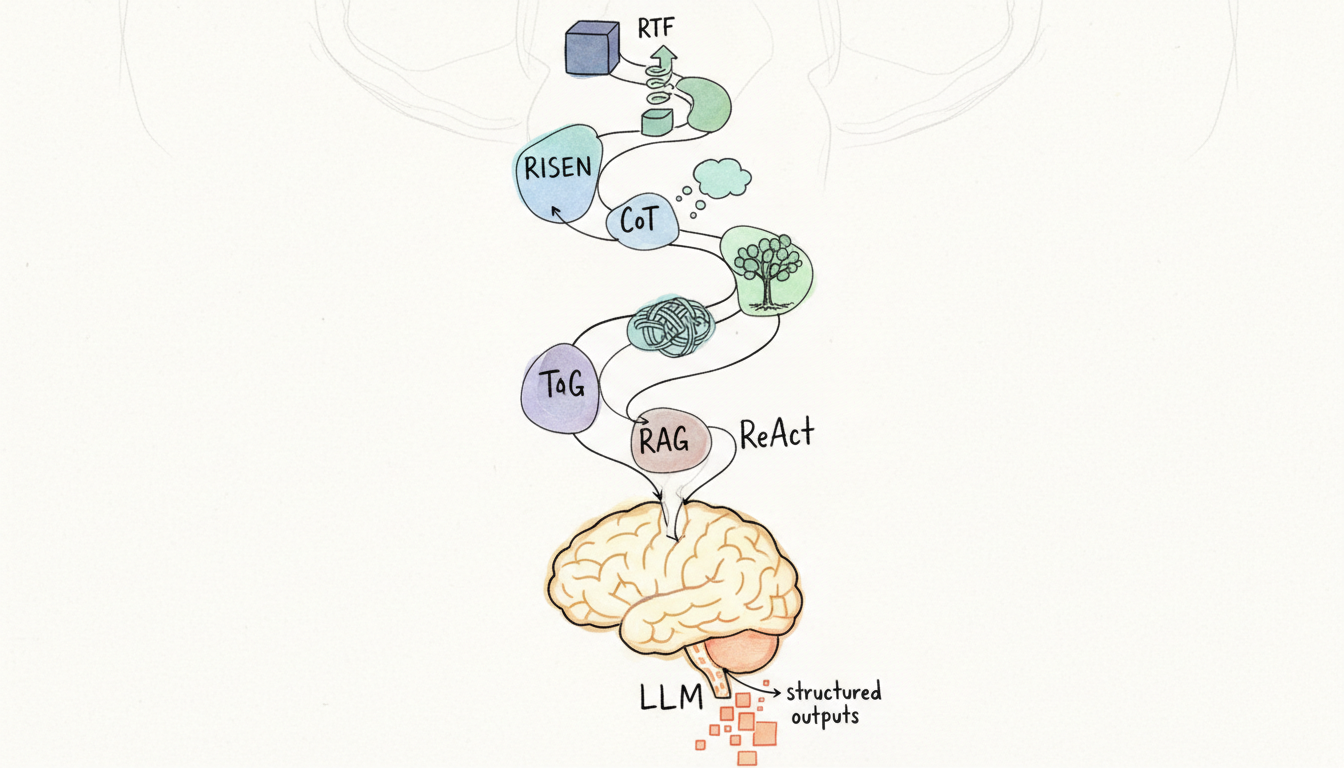
Chain of Thought (CoT)
Encourage step-by-step reasoning with phrases like 'Let’s think step-by-step.' This approach helps break down complex problems, often improving accuracy in logic-heavy or calculation-based tasks.
Few-Shot Prompting
Supply 2-3 examples of the desired style or format before stating your main request. This helps align the AI with your specific requirements, like a consistent brand voice or technical standards.
Universal Principles for Global Prompting
- Language Agnostic Logic: Prompts well-crafted in English tend to produce solid results even when translated to other supported languages.
- Iterative Refinement: Approach prompting as an ongoing dialogue—ask the AI to review its own output or suggest improvements based on your criteria.
- Ethical Guardrails: Always verify LLM responses for accuracy, as they emphasize plausibility over verified facts. Best used for ideation and drafts, followed by human oversight for final work.
Conclusion: Prompting as the Interface of Innovation
Prompt engineering isn't a set of rigid rules—it's a mindset centered on structured clarity. Developing this skill enables you to scale ideas globally at the speed of thought. In the end, those who craft the most effective questions will lead, regardless of the tools available.
How are you leveraging prompts to transform your workflow? The AI conversation is just beginning.